
Most asked for

Round brilliant, 1.00ct
D VVS2, excellent cut, IGI
4,200 EnquireLoose stones from 1.00ct and above, every one with an IGI or GIA report and a second grading done at our own bench while you watch.
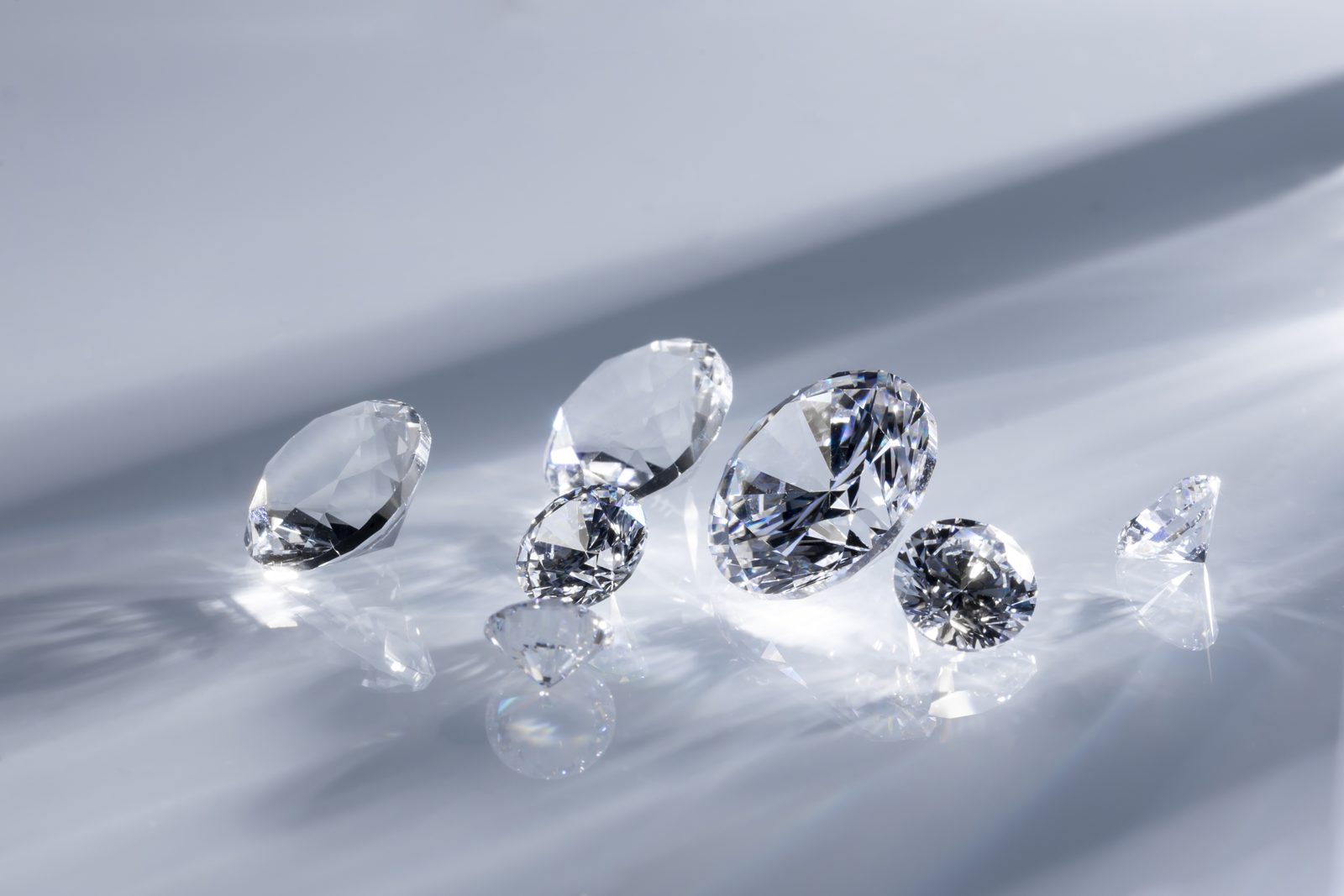
A lab grown diamond is a diamond. Same crystal, same hardness, same fire, graded by the same laboratories on the same scale. The only difference is that the crystal grew in a reactor over a few weeks rather than underground over a few billion years.
A tester reads them as diamond because they are diamond. What that means in practice is that you can buy noticeably more stone for the same money, or the same stone for noticeably less.
We sell both grown and mined, priced side by side, and we will never pretend one is the other. Every grown stone we sell is laser inscribed on the girdle with its report number, so you can read it yourself under our loupe.
Prices are for the stone alone. Settings are quoted separately so you can see what you are paying for each.
D VVS2, excellent cut, IGI
4,200 Enquire
E VS1, excellent cut, GIA
7,600 Enquire
D VS1, excellent cut, GIA
12,900 Enquire
E VVS2, 1.38 ratio, IGI
5,100 Enquire
F VS1, 1.55 ratio, IGI
3,750 Enquire
E VVS2, 1.42 ratio, GIA
6,900 EnquireAround ninety loose stones are in the case at any time. Tell us the shape, size and budget and we will pull a tray.
Four steps, about twenty minutes, and you keep both gradings on paper.
Before the stone. We read the certificate together so you know what the laboratory concluded before your eye is influenced by the diamond itself.
The report number is laser cut into the girdle. Under our loupe you match it to the paper yourself. This is the step that makes a certificate worth anything.
Colour against a master set, clarity at 10x. Our reading goes on paper next to the laboratory’s. If they disagree, the stone goes back to the supplier.
We put two or three similar stones on the tray, because a grade on paper means much less than what your eye does with the stone next to another one.
Where the money is worth spending, in our experience across the counter.
Tell us the shape, the size and the budget before you arrive and the stones will be waiting on the counter.
Book an appointment